
Resin flooring for pasta factories
Hygiene, the continuity of processes, and the safety of operators are important elements within the production environment of a pasta factory. Surfaces are constantly exposed to flours, powders, dough residues, water, and frequent washing cycles, in addition to mechanical stresses related to the presence of production lines and handling systems.
RPM Italy designs resin flooring for pasta factories based on the actual operating conditions, distinguishing between production areas and service zones. Differentiated resin systems in terms of thickness and finish contribute to better management of environments by supporting the organization of flows within the facility.
The needs of pasta factories and the resin solutions of RPM Italy
Continuous production processes, presence of processing residues, and frequent cleaning cycles: RPM Italia designs and installs resin flooring to meet the specific needs of pasta factories, developing solutions that ensure hygiene, safety, and performance stability over time.
Movement control
Stability and grip during training and physical activities
Resin flooring with calibrated anti-slip grip based on the area of use, to provide effective control of movements even in the presence of water or sweat.
Non-slip floors
reduce the risk of slipping in the presence of flour or processing residues.
Surfaces with a calibrated anti-slip finish based on the area of use, designed to increase grip and maintain the ease of cleaning required by the food industry.
Resistance to intensive use
Support active productions 24/7 without deteriorating.
High mechanical resistance resin systems, designed to withstand constant traffic from trolleys, equipment, and machinery while ensuring stability and functionality.
Washability and sanitization
Keep surfaces always clean and compliant with hygiene standards.
Continuous and waterproof resin flooring that supports frequent washing with industrial detergents and high-pressure systems.
Custom flooring for every operational area
Considering the different phases of the production process and the specific operating conditions, the design of resin flooring for pasta factories in RPM Italy is carried out with a tailored approach. The differentiation in thickness and finish allows for the functional organization of spaces, promoting environmental control and an orderly management of activities.
Packaging
Compliance with hygiene and health procedures
Resin flooring with flat surfaces that facilitate daily cleaning operations, sanitization, and the orderly management of packaging areas.

Production line
Resistance to vibrations and continuous traffic
Resin surfaces that are resistant, stable, and easily washable from processing residues, supporting the continuity of production processes.

Request a consultation for your pasta factory.
RPM Italia creates resin flooring for pasta factories designed to ensure high washability, safety, and durability. Production and packaging lines require tailored solutions capable of supporting daily operations. Contact us for a personalized technical consultation or to schedule a dedicated site visit.
The most commonly used resin floors for pasta factories
The choice of resin systems for pasta factories is made by evaluating the frequency of washings, the presence of dust, and the usage methods of the spaces. Each resin system is adapted by RPM Italy with specific finishes to create flooring that is consistent with the functional needs of the processing environments.
_edited.png)
_edited.png)
How a resin floor for pasta factories is made
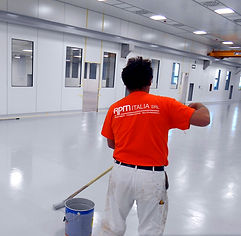
The creation of a resin flooring for pasta factories starts with an analysis of the production phases and operational criticalities, followed by a detailed technical planning. RPM Italy schedules the installation with the aim of integrating the intervention into existing workflows, managing time and organization to minimize production downtime and ensure continuity of activities.
Preliminary analysis of the environment
Every project starts with a technical inspection during which the existing support, environmental conditions, and the usage methods of the floor are analyzed to identify the most suitable resin system and to prevent future issues.
1)

Preparation of the substrate
Targeted mechanical processing, such as sanding, grinding, and shot blasting, is carried out to prepare the concrete substrate, or other types, essential to ensure the adhesion of the resin cycle and the durability of the flooring.
2)

Execution of complementary works
Before or during the installation of the resin floor, complementary works are carried out, namely drainage supports, perimeter edges, and skirting boards. These elements help complete the environment and facilitate cleaning and sanitization.
3)
Application of the resin cycle
Based on the required performance, the installation of the resin floor is carried out following specific cycles. We calibrate thicknesses, finishes, and slip resistance to achieve a continuous, safe, and durable surface.
4)

Final inspection and commissioning
Once the hardening cycle is complete, and thus the catalysis of the product, the surface is ready to be used. At the end of the application, the floor is checked in every detail to ensure safety, continuity, and compliance with the project.
5)
Certifications and technical documentation
6)
At the end of the work, RPM Italia provides the client with the technical documentation related to the applied system, including the certifications required for each sector, to support the needs for monitoring and managing the flooring over time.


