
thickness 0,3 mm – 1 cm
Industrial Resin Flooring for Humid Environments
A technical solution designed to work in the constant presence of water, condensation, and frequent washings, ensuring safety, hygiene, and durability over time in industrial and production environments.
Adherence
In humid environments, slip resistance is essential. Resin floors for wet areas are designed with systems that maintain stability and grip even in the presence of water, detergents, or liquid residues.
1
Waterproofness
The continuous resin surface creates a total barrier against liquid absorption, preventing infiltrations, detachments, and degradation of the substrate even in conditions of constant humidity.
2
Hygiene
The absence of joints and discontinuities makes the floor easy to clean and sanitize, reducing the risk of dirt, bacteria, and mold accumulation.
3

What is a resin industrial floor for wet environments?
An industrial floor for humid environments is a technical flooring designed to withstand critical operating conditions, where water, steam, condensation, and frequent washings are an integral part of the production process. In these contexts, a traditional floor risks becoming slippery, absorbing liquids, or deteriorating quickly.
RPM Italy creates resin floors specific for humid environments, studying waterproof, resistant, and safe systems that ensure operational continuity, ease of cleaning, and consistent performance even in the presence of aggressive detergents and intensive washing cycles.
The RPM solutions for industrial floors in humid environments
Based on the sector, washing frequency, and humidity level, RPM Italia selects the most suitable resin system to ensure high performance and durability.


Why choose a resin floor for humid environments
Choosing a resin floor for humid environments means adopting a solution designed to handle water as a normal working condition, without compromising safety or durability. The RPM Italy systems allow for stable, waterproof, and easy-to-clean surfaces even in the presence of frequent washings and aggressive substances. The resin reduces the risk of slips, protects the substrate, and helps maintain high hygiene standards, improving the organization and safety of the production environment.
Where industrial floors are used for humid environments
Resin flooring for wet environments is applicable in all contexts where water and humidity are constantly present and require dedicated technical solutions.

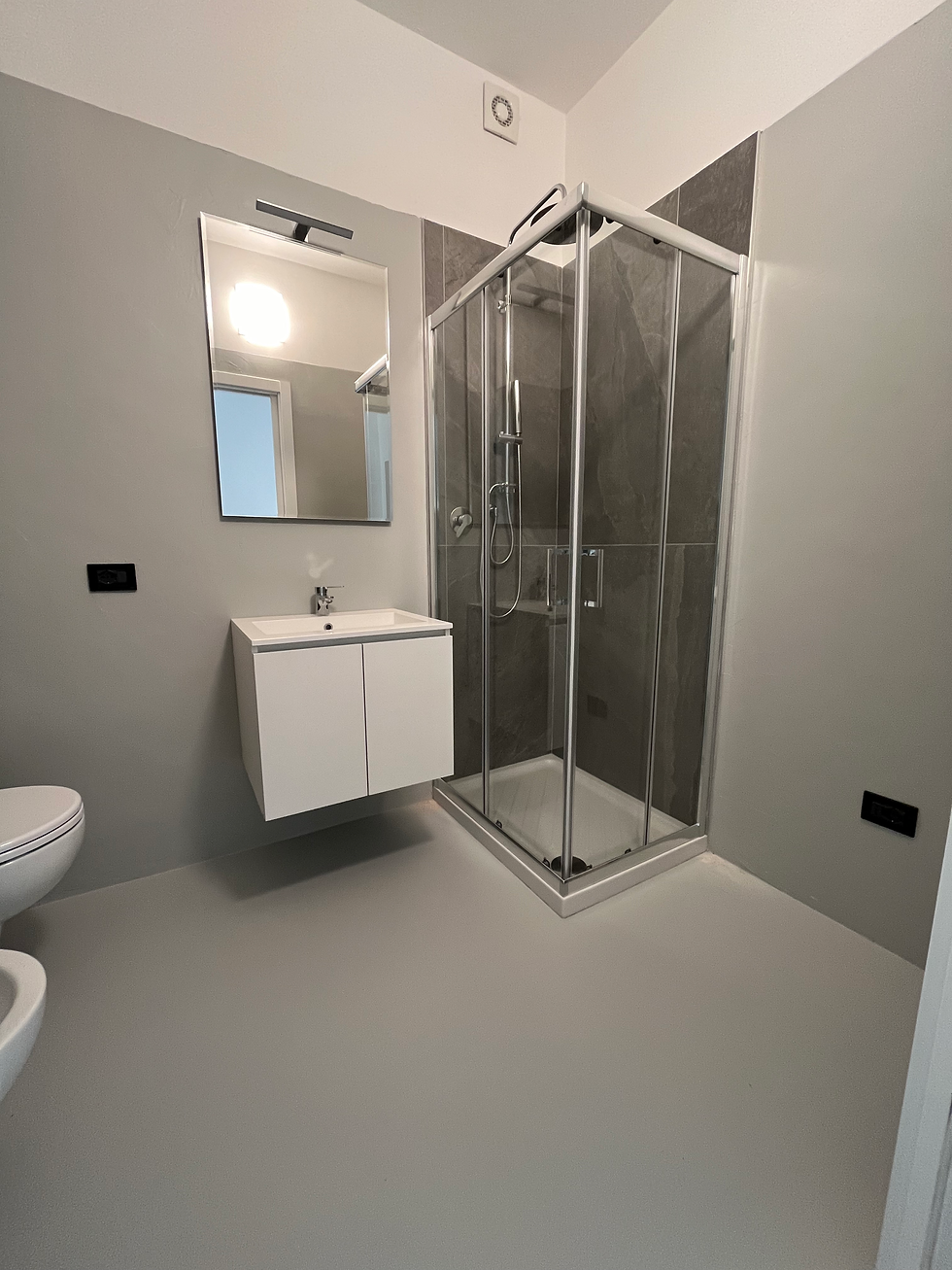
The application in the industrial and production field
These systems are particularly suitable for food and processing industries, cold storage rooms, washing and sanitization areas, industrial kitchens, canteens, sanitary environments, laboratories, chemical and pharmaceutical plants, as well as workshops and departments with the presence of oils or liquids. Wherever humidity poses a challenge, the resin applied by RPM Italia ensures safety, continuity, and reliability over time.

How a resin floor for wet environments is made
The implementation begins with a careful analysis of the substrate to assess humidity, slopes, and operational conditions. Subsequently, the support is prepared through grinding or shot blasting to promote adhesion. After the application of the primer, the chosen resin cycle is laid down, calibrating the characteristics of adhesion and impermeability based on the environment. The system concludes with a protective finish designed to withstand frequent washing and aggressive detergents.
Preliminary analysis of the environment
Every project starts with a technical inspection during which the existing support, environmental conditions, and usage methods of the floor are analyzed to identify the most suitable resin system and to prevent future issues.
1)

Preparation of the substrate
Targeted mechanical processing, such as sanding, grinding, and shot blasting, is carried out to prepare the concrete substrate, or of another type, which is essential to ensure the adhesion of the resin cycle and the durability of the flooring.
2)

Execution of complementary works
Before or during the installation of the resin floor, complementary works are carried out, namely drainage supports, perimeter edges, and skirting boards. These elements help to complete the environment and facilitate cleaning and sanitization.
3)
Application of the resin cycle
Based on the required performance, the installation of the resin floor is carried out following specific cycles. We calibrate thicknesses, finishes, and slip resistance to achieve a continuous, safe, and durable surface.
4)

Final inspection and commissioning
Once the curing cycle is completed, and thus the catalysis of the product, the surface is ready to be used. At the end of the application, the floor is checked in every detail to ensure safety, continuity, and compliance with the project.
5)

Certifications and technical documentation
6)
At the end of the work, RPM Italia provides the client with the technical documentation related to the applied system, including the certifications required for each sector, to support the needs for monitoring and managing the flooring over time.

Request a consultation or a quote
RPM Italia creates outdoor resin floors for homes, businesses, commercial areas, and public spaces. Contact us for a technical assessment and to choose the best system for your project.